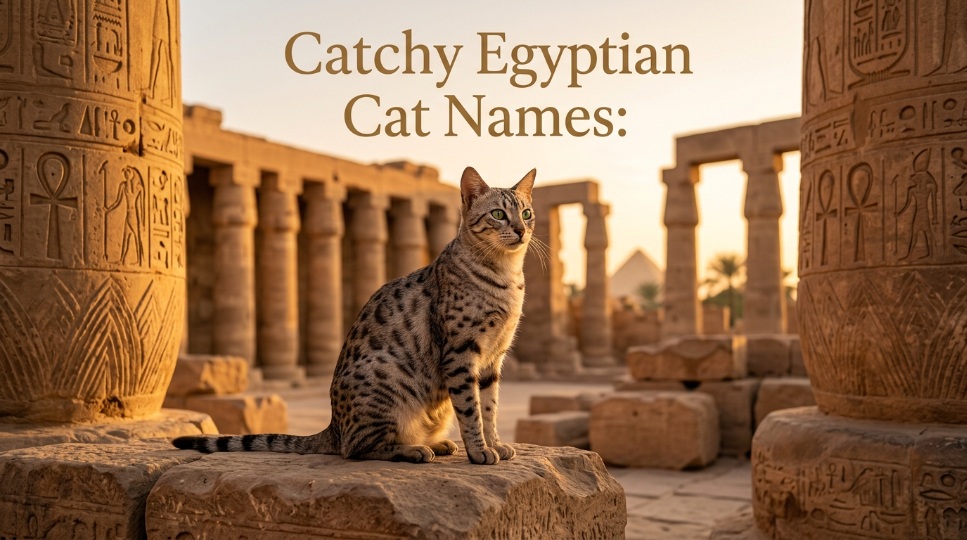
If you just brought home a sleek, golden-eyed kitten and you’re scrolling for the perfect name, you’re in the right place. Egyptian cat names carry thousands of years of history, and picking one isn’t just about sound — it’s about giving your cat an identity rooted in myth, royalty, and reverence.
Quick answer: The most catchy Egyptian cat names include Bastet, Ra, Cleo, Isis, Anubis, Sphinx, Nefer, Osiris, Sekhmet, and Horus. These names come from Egyptian mythology and history, where cats were sacred animals linked to protection, the sun, and the afterlife. They work well for both male and female cats and suit breeds like the Egyptian Mau, Abyssinian, and Sphynx.
Below, you’ll find a deep dive into where these names come from, how to pick one that fits your cat’s personality, breed-specific suggestions, common naming mistakes, and a full FAQ section built around the questions real cat owners actually search for.
Why Egyptian Names Suit Cats So Well
Ancient Egyptians didn’t just tolerate cats — they worshipped them. Cats guarded grain stores from rodents, symbolized fertility, and were associated with several major deities. Killing a cat, even by accident, could carry severe punishment under Egyptian law.
This deep cultural bond is exactly why Egyptian-themed names feel so fitting for modern cats. A name like Bastet or Ra doesn’t just sound exotic — it connects your pet to a civilization that saw cats as divine.
Cat breeds like the Egyptian Mau, one of the oldest natural cat breeds still in existence, trace their lineage directly back to depictions found in Egyptian tombs and hieroglyphics. Naming a Mau after a pharaoh or goddess isn’t just stylish — it’s historically accurate.
Featured Snippet: Top 10 Catchy Egyptian Cat Names
| Rank | Name | Meaning |
| 1 | Bastet | Goddess of home, protection, and cats |
| 2 | Ra | Sun god, symbol of power and light |
| 3 | Isis | Goddess of magic and motherhood |
| 4 | Anubis | God of the afterlife, jackal-headed |
| 5 | Cleo | Short for Cleopatra, meaning “glory of the father” |
| 6 | Sphinx | Mythical guardian creature, half lion half human |
| 7 | Nefer | Means “beautiful” in ancient Egyptian |
| 8 | Osiris | God of the underworld and rebirth |
| 9 | Sekhmet | Lioness goddess of war and healing |
| 10 | Horus | Falcon-headed sky god |
Egyptian Cat Names for Male Cats
Male cats often get names tied to gods, pharaohs, and powerful mythological figures. These names tend to sound strong and commanding, which suits a confident tomcat or a regal longhair.
| Name | Origin/Meaning | Personality Fit |
| Ra | Sun god, ultimate power | Bold, dominant cats |
| Anubis | God of death and mummification | Mysterious, quiet cats |
| Osiris | God of the underworld | Calm, watchful cats |
| Horus | Sky god, protector | Alert, agile cats |
| Set (Seth) | God of chaos and storms | Mischievous, energetic cats |
| Thoth | God of wisdom and writing | Smart, curious cats |
| Sobek | Crocodile god of the Nile | Tough, independent cats |
| Amun | King of the gods | Large, majestic cats |
| Ptah | Creator god | Gentle giants |
| Khonsu | Moon god | Nighttime prowlers |
Egyptian Cat Names for Female Cats
Female Egyptian names tend to draw from goddesses linked to beauty, motherhood, magic, and the home — themes that pair naturally with a graceful, affectionate cat.
| Name | Origin/Meaning | Personality Fit |
| Bastet | Cat goddess of protection | Loyal, homebody cats |
| Isis | Goddess of magic | Elegant, mysterious cats |
| Cleopatra | Famous queen | Confident, glamorous cats |
| Nefertiti | “The beautiful one has come” | Striking, photogenic cats |
| Sekhmet | Lioness warrior goddess | Fierce, protective cats |
| Hathor | Goddess of love and joy | Playful, affectionate cats |
| Ma’at | Goddess of truth and balance | Calm, well-behaved cats |
| Neith | Goddess of hunting and war | Active, hunting-instinct cats |
| Tefnut | Goddess of moisture and rain | Water-curious cats |
| Wadjet | Cobra goddess, protector of kings | Watchful, alert cats |
Short and Catchy Egyptian Cat Names
Long names look great on paper, but you’ll be calling your cat’s name every single day. Shorter, punchier versions are often easier to use in real life, especially for recall training.
- Cleo (short for Cleopatra)
- Nefer (short for Nefertiti)
- Ra
- Set
- Isis
- Sphinx
- Mau (Egyptian word for “cat”)
- Kek (god of darkness)
- Bast
- Anu (short for Anubis)
Notice a pattern? Most of these are one or two syllables. Cats respond best to short, sharp sounds — that’s part of why names like “Cleo” and “Ra” have stayed popular for generations of Egyptian Mau owners.
Names Based on Egyptian Cat Breeds and History
Some names aren’t gods at all — they come directly from Egyptian language, geography, or historical figures tied to cats.
| Name | Category | Why It Works |
| Mau | Ancient Egyptian word for cat | Simple, direct, breed-accurate |
| Giza | Location of the pyramids | Strong, place-based name |
| Nile | The river that shaped Egypt | Smooth, flowing sound |
| Luxor | Ancient city of temples | Regal and rare |
| Karnak | Famous temple complex | Distinctive, unusual |
| Ankh | Symbol of eternal life | Short, meaningful |
| Scarab | Sacred beetle symbol | Great for black cats |
| Papyrus | Ancient writing material | Soft, gentle sound |
| Sahara | The desert bordering Egypt | Fits tan or sandy-colored cats |
| Pharaoh | Ruler title | Bold and commanding |
How to Choose the Right Egyptian Name for Your Cat
Picking a name isn’t just about liking how it sounds. A few practical factors make the process easier and help the name actually stick.
1. Match the Name to Coat Color
Golden or bronze-spotted cats, like the Egyptian Mau, suit sun-god names like Ra or Horus. Black cats pair beautifully with Anubis, Bastet, or Scarab, since black was historically the color associated with the afterlife and protection in Egyptian art.
2. Consider Your Cat’s Personality
A shy, watchful cat might suit Anubis or Ma’at. An outgoing, playful kitten fits better with Hathor or Bes (the dwarf god of joy and entertainment). Watch your cat for a few days before deciding — personality often reveals itself fast.
3. Test the Name Out Loud
Say the name in a happy, high-pitched tone, the way you’d call your cat for dinner. Names with hard consonant sounds (K, T, P) tend to grab a cat’s attention more effectively than soft, drawn-out names.
4. Check the Syllable Count
One to two syllables is ideal. If you love a longer name like Nefertiti or Cleopatra, keep it as the “formal” name and use a shortened nickname like Nefer or Cleo day to day.
Common Mistakes When Naming a Cat After Egyptian Themes
Mistake 1: Picking a name that’s hard to pronounce consistently. If you can’t say it the same way every time, your cat won’t learn to recognize it as their name.
Mistake 2: Choosing a name based only on looks, ignoring meaning. Part of the appeal of Egyptian names is the story behind them. Skipping the meaning wastes the opportunity to give your cat a name with real depth.
Mistake 3: Copying a name that sounds too close to a command. Avoid names that rhyme with “no,” “sit,” or “down.” Anubis, for example, works fine, but a name like “Bo” can get confused with basic commands during training.
Mistake 4: Overlooking gender-neutral options. Not every household knows a kitten’s full personality or even confirms sex early on. Names like Mau, Sphinx, Nile, and Giza work regardless of gender.
Mistake 5: Ignoring how the name looks on vet paperwork or pet tags. Names like “Amun-Ra” look great in mythology books but can be awkward on a small ID tag. Shorten it where practical.
Expert Tips From Experienced Cat Owners
Long-time Egyptian Mau breeders and rescue volunteers often repeat the same advice: introduce the name within the first three days of adoption, and use it consistently during feeding, not just play. Cats build name recognition fastest when it’s tied to a reward, like food or treats, rather than random calling throughout the day.
Another tip worth noting: many shelters report that cats respond better to names ending in a vowel sound, similar to how “Cleo” and “Isis” end softly. This isn’t mythology — it’s simply easier for a cat’s ear to catch a rising or open-ended sound.
If you’re renaming an adopted adult cat, transition slowly. Use the old name alongside the new one for about a week, gradually phasing out the original.
Egyptian Cat Names by Theme
Names Inspired by Royalty
- Pharaoh
- Cleopatra
- Nefertiti
- Tutankhamun (Tut)
- Ramses
- Hatshepsut (Hattie)
Names Inspired by Mythology
- Bastet
- Ra
- Anubis
- Osiris
- Isis
- Horus
- Sekhmet
- Thoth
Names Inspired by Egyptian Symbols
- Ankh
- Scarab
- Eye (short for Eye of Horus)
- Lotus
- Obelisk
Names Inspired by Geography
- Nile
- Giza
- Luxor
- Karnak
- Sahara
- Memphis (the ancient Egyptian capital, not just the U.S. city)
Comparison: Mythological Names vs. Historical Names
| Category | Examples | Best For | Vibe |
| Mythological | Bastet, Ra, Anubis, Isis | Cats with strong, distinct personalities | Mystical, powerful |
| Historical/Royal | Cleopatra, Ramses, Nefertiti | Elegant, dignified cats | Regal, refined |
| Geographic | Nile, Giza, Sahara | Simple, nature-loving households | Grounded, calm |
| Symbolic | Ankh, Scarab, Lotus | Owners wanting deeper meaning | Spiritual, thoughtful |
Each category tells a slightly different story about your cat. Mythological names lean dramatic. Geographic names feel understated. Pick the category that matches how you want to introduce your cat to guests, not just how the name sounds alone.
Egyptian Mau-Specific Naming Ideas
The Egyptian Mau is the only naturally spotted domestic cat breed, and its name literally means “cat” in the Egyptian language. Because this breed is so closely tied to ancient Egypt, owners often lean into full historical accuracy.
Popular Mau-specific choices include Silver Mist (for silver Maus), Bronze (for bronze-coated Maus), Smoke (for the rare smoke coloring), and Mau itself, used as a proud, breed-accurate name rather than a placeholder.
The History Behind Cats in Ancient Egypt
Cats didn’t become sacred overnight. Archaeological evidence suggests domestication began around 4,000 years ago in the Nile Valley, where wildcats were drawn to grain stores by the rodents feeding on stockpiled harvests. Farmers noticed the benefit and started encouraging cats to stay close, eventually leading to a genuine partnership between humans and cats.
Over centuries, that practical relationship turned into religious devotion. Temples were built specifically to honor Bastet, and pilgrims traveled from across the region to the city of Bubastis for annual festivals celebrating the goddess. Mummified cats have been found by the thousands in ancient burial sites, some wrapped with the same care given to human remains, complete with tiny linen wrappings and even miniature sarcophagi.
Paintings and carvings from tombs, including those in the Valley of the Kings, frequently show cats sitting beneath chairs during family meals or accompanying hunters on boats through papyrus marshes. These images tell us cats weren’t just pest control — they were companions woven into daily Egyptian life, much like they are in modern households today.
This history matters for naming because it explains why certain names carry more weight than others. A name like Bastet isn’t just decorative; it references an actual religious tradition thousands of years old, tied to real temples, festivals, and artifacts still studied by Egyptologists today.
How Ancient Egyptian Naming Conventions Actually Worked
Understanding real Egyptian naming patterns can help you create a name that feels authentic rather than randomly mythological. Ancient Egyptians often built names around a few consistent patterns:
God-plus-quality names. Many royal and common names combined a deity’s name with a trait or blessing, such as “beloved of Ra” or “beauty of Amun.” You can borrow this structure loosely for a cat by pairing a god’s name with a nickname reflecting your cat’s trait, like “Ra the Bold” or “Bastet the Watchful.”
Descriptive names. Regular Egyptians, not just royalty, often received names describing a physical trait, birth circumstance, or hoped-for future, similar to how “Nefer” simply means beautiful. This is why short, meaning-based names like Nefer or Ankh feel just as authentic as a full god’s name.
Titles used as names. Words like Pharaoh, which technically means “great house,” eventually became used almost like a name or title on its own. This is part of why “Pharaoh” works so well as a standalone cat name today, even though it wasn’t originally a personal name.
Knowing these patterns gives you more flexibility. You’re not limited to a fixed list of ten gods — you can build a name that follows the same logic ancient Egyptians actually used.
Egyptian Cat Names for Kittens vs. Adult Cats
Naming a kitten is different from renaming an adult cat, and the Egyptian theme works slightly differently for each situation.
Naming a New Kitten
With a kitten, you have the freedom to pick any name without worrying about existing habits or associations. This is the best time to use a longer, more meaningful name like Nefertiti or Tutankhamun, since you can shorten it naturally as your kitten grows and the nickname becomes second nature.
Kittens also respond well to names introduced early and used constantly during bonding activities like feeding, grooming, and play. The first two weeks are the most important window for building name recognition.
Renaming an Adult or Rescue Cat
If you’re adopting an adult cat, especially from a shelter, consider whether the cat already responds to a name. Older cats can absolutely learn a new name, but it takes patience. Use the old and new names together for one to two weeks, always pairing the new name with something positive, like a treat or gentle praise.
For rescue cats with rough histories, some owners choose meaningful protector names like Sekhmet or Wadjet as a way of symbolically giving the cat a fresh, empowered start.
Matching Egyptian Names to Cat Breeds
While any cat can carry an Egyptian name, certain breeds have a stronger historical or visual connection to ancient Egypt, making the theme feel even more fitting.
| Breed | Connection to Egypt | Suggested Names |
| Egyptian Mau | Directly descended from ancient Egyptian cats | Mau, Ra, Bastet, Giza |
| Abyssinian | Long believed to resemble cats in Egyptian art | Nefer, Horus, Cleo |
| Sphynx | Named after the Great Sphinx of Giza | Sphinx, Anubis, Set |
| Oriental Shorthair | Sleek build echoes Egyptian tomb depictions | Isis, Osiris, Nile |
| Domestic Shorthair | Most common breed, works with any name | Any name on this list |
The Egyptian Mau remains the strongest match, both genetically and visually, but you don’t need a specific breed to justify an Egyptian name. The theme works for any cat whose personality, color, or vibe fits the meaning behind the name.
Egyptian Cat Name Pairs for Two Cats
If you’re adopting two cats at once, pairing complementary Egyptian names adds an extra layer of storytelling.
| Pair | Meaning Connection |
| Isis and Osiris | Divine siblings and partners in Egyptian mythology |
| Ra and Nut | Sun god and sky goddess, representing day and night |
| Bastet and Sekhmet | Both lioness-linked goddesses, gentle and fierce sides |
| Horus and Set | Rival gods, symbolizing balance and contrast |
| Anubis and Ma’at | Death and truth, both central to the afterlife journey |
Choosing a linked pair not only sounds intentional when introducing your cats to guests, it also reflects real mythological relationships, adding a subtle layer of meaning that random name pairs can’t match.
Voice Search and Quick Reference: Fast Facts
For anyone asking a smart speaker or search engine a quick question, here are direct, voice-search-friendly answers:
- What is a good Egyptian name for a cat? Bastet, Ra, and Isis are among the most popular and recognizable choices.
- What is the Egyptian name for a black cat? Anubis and Kek both work well due to their symbolic ties to darkness and the afterlife.
- What is a short Egyptian cat name? Cleo, Ra, Mau, and Set are all one or two syllables.
- What is the Egyptian goddess of cats called? Bastet is the primary goddess associated with cats and protection.
Additional Semantic Themes Worth Considering
Beyond gods and pharaohs, Egyptian culture offers other naming pools that are less commonly used but equally rich in meaning.
Hieroglyphic symbols. Names like Ankh (life), Djed (stability), and Was (power) come directly from hieroglyphic iconography and offer a unique, lesser-used option for owners wanting something distinctive.
Nile wildlife. Since cats coexisted with other animals sacred to Egyptian culture, names like Ibis, Falcon, or Cobra nod to the broader ecosystem of Egyptian symbolism without repeating the most common god names.
Colors and materials tied to Egyptian art. Lapis (a prized blue stone), Gold, and Alabaster all reference materials commonly used in Egyptian jewelry and temple decoration, making them elegant, texture-based name options.
People Also Ask
What did ancient Egyptians name their cats?
Historical records show ancient Egyptians often used descriptive names for cats, such as “Miu” or “Mau,” which simply meant “cat” or referenced the sound cats make. Cats were also sometimes given names honoring Bastet directly, treating the pet almost as a small representation of the goddess herself.
Is Bastet a good name for a male or female cat?
Bastet is traditionally a goddess, making it more common for female cats, but plenty of owners use it for male cats too, especially if the name is shortened to “Bast.” Gender doesn’t have to limit mythological names.
What is the Egyptian word for cat?
The ancient Egyptian word for cat is “miu” or “mau,” which is believed to be onomatopoeic, mimicking the meowing sound cats make. This is also where the Egyptian Mau breed gets its name.
What is the most famous Egyptian cat god?
Bastet is the most widely recognized Egyptian cat deity. Originally depicted as a lioness, she later evolved into a domestic cat goddess representing protection, fertility, and the home.
Are Egyptian Mau cats actually from Egypt?
Yes, the Egyptian Mau is considered one of the oldest natural cat breeds, with strong genetic and visual links to cats depicted in Egyptian tomb paintings dating back thousands of years.
What’s a unique Egyptian name for a black cat?
Anubis, Scarab, and Kek (the god of primordial darkness) all work particularly well for black cats, since black held strong symbolic meaning in Egyptian mythology, often tied to fertility and the afterlife rather than bad luck.
Can I use Egyptian god names for a female cat?
Absolutely. Many owners use male god names like Ra, Horus, or Anubis for female cats simply because they like the sound or meaning, and there’s no rule requiring gender-matched mythology.
What does the name Sphinx mean for a cat?
Sphinx refers to the mythical guardian creature with a lion’s body and human head, most famously represented by the Great Sphinx of Giza. It’s also the name of a hairless cat breed, making it a popular double-meaning choice.
How do I pronounce Nefertiti correctly for everyday use?
Nefertiti is pronounced “Neh-fer-TEE-tee,” but most owners shorten it to “Nefer” or “Titi” for daily use, since the full name can be a mouthful when calling a cat across the house.
Are there Egyptian names that mean “protector,” good for a guard-like cat?
Yes. Wadjet, the cobra goddess, and Sekhmet, the lioness warrior goddess, both carry strong protective meanings and suit cats that act territorial or watchful over their home.
Final Thoughts
A cat’s name sticks for 15 years or more, so it’s worth taking the time to get it right. Egyptian names offer something most trendy name lists can’t: thousands of years of proven cultural weight. Whether you go with something powerful like Ra, elegant like Nefertiti, or simple like Mau, you’re giving your cat a name with real history behind it.
Take a few days to watch your cat’s personality, say your favorite names out loud, and don’t be afraid to shorten a longer mythological name into something easy to call across the room. The right name usually reveals itself once you stop overthinking it and start paying attention to who your cat actually is.
