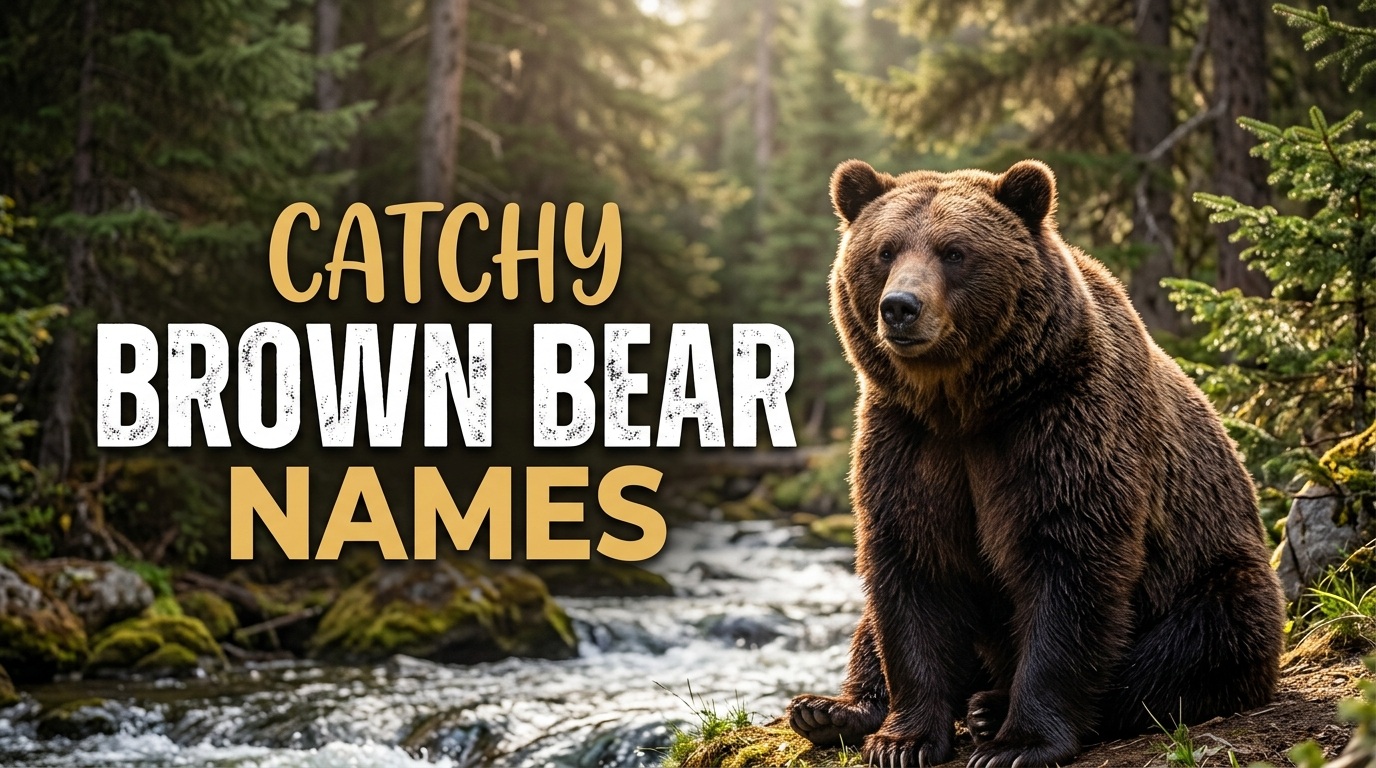
Picking a name for a brown bear isn’t as simple as it looks. Whether you’re naming a zoo resident, a D&D character, a mascot, a stuffed animal, or a character in a story, the name needs to match the bear’s size, personality, and presence. A weak name makes a 900-pound apex predator sound like a house cat. A strong one sticks in people’s heads for years.
Quick answer: The most catchy brown bear names combine strength, nature, and personality — think Boulder, Cinnamon, Kodiak, Grizzwald, Ursa, Bruno, Maple, and Copperclaw. The best names either describe the bear’s fur color (amber, rust, mahogany), reference its habitat (Yukon, Timber, Ridge), or borrow from mythology (Ursa, Artio, Callisto) — all while staying easy to say out loud.
This guide covers over 150 names sorted by category, explains the naming logic zoos and wildlife writers actually use, and answers the most common questions people search for when naming a brown bear.
What Makes a Brown Bear Name Actually “Catchy”?
A name is catchy when it’s short, easy to remember, and matches the animal it’s describing. For brown bears specifically — including grizzly bears, Kodiak bears, and the Eurasian brown bear — that usually means the name draws on one of three things: physical traits, habitat, or personality.
Brown bears (Ursus arctos) are one of the most widely distributed bear species on the planet, found from the mountains of Alaska to the forests of Romania. Because the species covers so much ground, naming trends vary by region too. A Kodiak bear in Alaska might get a name tied to salmon runs and glaciers, while a Himalayan brown bear might get something rooted in mountain folklore.
Wildlife communicators — the people who write zoo signage, sanctuary newsletters, and conservation campaigns — treat naming as a small but serious craft. A name is often the first (and sometimes only) piece of information a visitor remembers about an individual animal, so it has to carry weight without being complicated. That’s true whether the audience is a family walking past an enclosure or a reader scrolling through a wildlife blog post.
The Three Pillars of a Strong Bear Name
- Sound — Short, punchy names (one or two syllables) tend to stick better than long ones. “Bruno” beats “Bartholomew” for recall.
- Meaning — A name tied to color, strength, or habitat gives people something to connect with immediately.
- Personality fit — Playful bears suit softer names like Honey or Waddles. Dominant, territorial bears suit names like Titan or Thorne.
Catchy Brown Bear Names by Category
Below are the strongest options, grouped so you can pick based on the vibe you want — powerful, cute, nature-inspired, or classic.
Strong and Powerful Brown Bear Names
These work well for large male bears, dominant zoo residents, or fictional characters meant to feel intimidating.
| Name | Why It Works |
| Boulder | Suggests size, weight, and immovability |
| Titan | Mythological strength, easy to say |
| Thorne | Sharp sound, feels rugged |
| Kodiak | Direct reference to the largest brown bear subspecies |
| Grizzwald | Playful twist on “grizzly,” memorable |
| Ragnar | Norse-inspired, fits a fierce bear |
| Bruiser | Blunt, tough-sounding |
| Atlas | Implies the bear can carry the weight of a mountain |
| Duke | Short, commanding |
| Maximus | Bold and dramatic without being silly |
Cute and Playful Brown Bear Names
Better suited for cubs, plush toys, pets in fiction, or lighter-hearted mascots.
| Name | Why It Works |
| Honeybear | Warm, affectionate, instantly likable |
| Waddles | Playful, matches a bear’s walking style |
| Biscuit | Soft sound, food-based names test well with kids |
| Snickers | Familiar, funny, easy for children to say |
| Fuzzy | Descriptive and simple |
| Pudge | Cute nickname feel |
| Bumble | Light, bouncy sound |
| Marshmallow | Contrast between the name and the animal’s real size adds charm |
| Cubby | Direct nod to a young bear |
| Nutmeg | Warm, cozy, and food-inspired |
Nature-Inspired Brown Bear Names
Great for zoo bears, conservation park residents, or wildlife documentaries where you want the name to reflect habitat.
| Name | Why It Works |
| Timber | Ties directly to forest habitat |
| Yukon | References northern range and wilderness |
| Ridge | Evokes mountain terrain |
| Birch | Common tree in brown bear habitat |
| Willow | Soft but nature-rooted |
| Canyon | Broad, rugged landscape reference |
| Aspen | Popular tree-based name with a modern feel |
| Cedar | Grounded, woodsy |
| Meadow | Works well for a calmer, gentler bear |
| Frost | Suits bears in colder climates |
Names Based on Fur Color
Brown bears actually range from pale blond to nearly black, so color-based names have a lot of range to work with.
- Cinnamon
- Copper
- Rusty
- Amber
- Mahogany
- Chestnut
- Umber
- Sienna
- Toffee
- Caramel
Mythology and Legend-Inspired Names
Bears show up across nearly every mythology, which makes this category rich with options.
| Name | Origin/Meaning |
| Ursa | Latin for “bear,” tied to the constellation Ursa Major |
| Artio | Celtic bear goddess |
| Callisto | Greek nymph turned into a bear by Zeus |
| Bjorn | Old Norse for “bear,” root of many Scandinavian names |
| Mishka | Slavic nickname meaning “little bear” |
| Ayarragh | Inuit-influenced, tied to Arctic bear legends |
| Orso | Italian word for “bear” |
| Baloo | Hindi-origin word meaning “bear,” popularized by The Jungle Book |
| Ber | Old Germanic root behind the modern word “bear” |
| Torvald | Norse-inspired, means “ruler,” pairs well with bear characters |
Where Brown Bears Live (and Why It Shapes Their Names)
Brown bears have one of the widest natural ranges of any land mammal, which explains why naming trends differ so much depending on where a bear actually lives.
- North America — Grizzly bears roam Alaska, Montana, Wyoming, and parts of Canada, often near Yellowstone National Park and Katmai National Park. Names here often reference mountains, rivers, and wilderness (Ridge, Yukon, Denali).
- Kodiak Island, Alaska — Home to the Kodiak bear, the largest brown bear subspecies. Names tied to size and salmon-rich habitat (Kodiak, Tundra, Glacier) fit naturally.
- Europe — The Eurasian brown bear lives across Romania, Scandinavia, and parts of the Balkans. Slavic and Norse-rooted names (Mishka, Bjorn, Orso) feel more authentic here.
- Asia — Himalayan and Syrian brown bear populations are smaller and more endangered, often tied to regional folklore and local dialect names.
This geographic variety matters for anyone writing about brown bears for a global audience, since it opens up dozens of culturally accurate naming options beyond generic English words.
Brown Bear Name Generator Formula (Do It Yourself)
If none of the names above feel like the exact fit, you can build one using a simple formula wildlife writers and zoo staff quietly rely on:
[Physical Trait or Color] + [Landscape Feature or Personality Word] = Name
| Step | Example Input | Resulting Name |
| Pick a color | Cinnamon | Cinnamon |
| Pick a landscape word | Ridge | Cinnamon Ridge → shorten to “Ridge” or “Cinna” |
| Pick a personality trait | Bold | Boldpaw |
| Combine trait + animal part | Copper + Claw | Copperclaw |
| Combine size word + sound | Boulder + Roar | Boulder (keep it simple) |
This formula works because it forces every name to carry at least one piece of real meaning, which is exactly what separates a catchy bear name from a random one.
Voice Search and Quick-Answer Queries
More people are now asking naming questions directly to voice assistants, so it helps to know how these queries are typically phrased and answered in one breath:
- “What’s a good brown bear name?” → Boulder, Cinnamon, or Kodiak are strong, easy-to-pronounce options.
- “What’s a cute name for a bear cub?” → Biscuit, Cubby, or Waddles work well for a young or playful bear.
- “What’s a badass bear name?” → Titan, Ragnar, or Thorne carry the most powerful tone.
- “What’s a girl bear name?” → Willow, Hazel, or Luna are common, gentle-sounding choices.
Structuring answers this way — short question, short direct answer — is exactly what search engines pull for voice results and zero-click snippets, so keep any bear-naming content you write in this same tight format.
Male vs. Female Brown Bear Names
In wildlife terminology, a male bear is called a boar and a female is called a sow. Naming conventions often (though not always) lean into that distinction.
| Male Names | Female Names |
| Bruno | Bella |
| Kodiak | Kaya |
| Thorne | Willow |
| Ragnar | Freya |
| Boulder | Sierra |
| Grizzwald | Hazel |
| Atlas | Aurora |
| Duke | Autumn |
| Maximus | Sage |
| Titan | Luna |
Famous Brown Bears in Pop Culture (For Naming Inspiration)
If you want a name that instantly clicks with an audience, borrowing structure from well-known bear characters helps — just avoid copying the exact name if you need something original.
- Winnie the Pooh — soft, whimsical naming style
- Baloo (The Jungle Book) — short, warm, easy to say
- Yogi Bear — playful and rhythmic
- Fozzie Bear (The Muppets) — comedic tone
- Paddington — polite, distinctly British character bear
- Smokey Bear — used in U.S. wildfire prevention campaigns since 1944
- Gentle Ben — from the 1960s TV series, built around a calm personality
These examples show a pattern: the most memorable bear names are almost always short, phonetically simple, and tied to either sound or personality — not complicated titles.
How to Choose the Right Brown Bear Name: Step-by-Step
- Decide on the tone first. Powerful, cute, or neutral — this narrows hundreds of options down to a manageable list.
- Say it out loud in a sentence. “This is Boulder, our resident grizzly” sounds different from “This is Sir Reginald Bearington III.”
- Check for real-world clashes. If it’s a zoo or sanctuary bear, search the name to avoid duplicating another famous animal.
- Match it to size and age. A tiny cub named Titan creates a fun contrast; a massive adult male named Cubby feels off.
- Test it with someone unfamiliar with the project. If they can repeat the name back after one hearing, it’s catchy enough to keep.
Common Mistakes People Make When Naming a Brown Bear
Choosing something too long. Names with three or more syllables lose punch fast. “Bartholomew Ridgewater” won’t stick the way “Ridge” will.
Ignoring the bear’s actual size and species. A Kodiak bear, the largest brown bear subspecies, deserves a name with weight behind it — not something delicate.
Copying a famous fictional bear directly. Reusing “Paddington” or “Yogi” for a real zoo animal or original character creates confusion and looks unoriginal.
Overusing generic words. “Bear,” “Grizzly,” and “Big” show up constantly and rarely feel memorable on their own — they work better as part of a name (Grizzwald, Bearington) than as the whole name.
Forgetting regional context. A Eurasian brown bear in a Romanian sanctuary might suit a Slavic-rooted name like Mishka more than an English word like Rusty.
Skipping the “say it three times fast” test. If a name is awkward to repeat, staff, visitors, or readers will shorten it anyway — better to start with something short.
Expert Tips From Wildlife Naming Practices
Zoos and wildlife sanctuaries that manage brown bear populations — including facilities tracking Yellowstone-area grizzlies and Alaska’s Kodiak Island bears — tend to follow a few unwritten rules worth borrowing:
- Alliteration helps recall. Names like “Boulder Bear” or “Cinnamon Cub” are easier for visitors and readers to remember.
- Avoid names too close to staff or donor names, which can create awkward mix-ups during public tours or fundraising events.
- Consider the bear’s story. A rescued cub found near a river might get a name like “River” or “Rapids” to reflect its background — this adds authenticity and an emotional hook for conservation storytelling.
- Keep a theme if naming multiple bears. Sibling cubs are often named around a shared idea (seasons: Winter, Autumn, Summer; or trees: Birch, Cedar, Aspen) so the group feels cohesive.
- Check pronunciation across audiences. A name that reads fine on paper (like “Ceallach”) may confuse visitors saying it out loud — simpler phonetics travel better.
Brown Bear Names vs. Polar Bear Names vs. Black Bear Names
Naming conventions shift depending on the species, mostly because of habitat and public perception.
| Category | Brown Bear | Polar Bear | Black Bear |
| Common themes | Earth tones, strength, forest | Ice, snow, Arctic | Woodland, shadow, stealth |
| Example names | Cinnamon, Boulder, Kodiak | Frost, Blizzard, Nanook | Shadow, Onyx, Hollow |
| Cultural references | Baloo, Smokey Bear, Yogi | Nanook (Inuit legend) | Winnie the Pooh (American black bear) |
| Typical tone | Rugged, warm-toned | Cold, sleek, minimal | Quiet, sharp, understated |
This kind of comparison matters because brown bear names that lean too heavily on “ice” or “frost” imagery can feel mismatched — those associations belong more naturally to polar bears.
Real-World Use Cases for Catchy Brown Bear Names
Zoos and wildlife sanctuaries use names to build public connection with individual animals, which supports conservation education and donor engagement.
Tabletop games and fantasy fiction (Dungeons & Dragons, fantasy novels) often need bear companion or monster names that feel grounded but original — mythology-based names work especially well here.
Children’s books and mascots benefit from soft, food-based, or alliterative names that are easy for young readers to pronounce.
Pet-naming for stuffed animals or plush toys tends to favor warm, comforting names like Honeybear or Marshmallow.
Branding and corporate mascots (outdoor brands, sports teams) usually lean toward powerful, one-word names like Titan, Boulder, or Ridge.
People Also Ask: Brown Bear Naming Questions Answered
What is a good nickname for a brown bear?
Short, warm nicknames like Cinnamon, Rusty, or Bruno work well because they’re easy to say and reflect the bear’s coloring or general presence without sounding forced.
What do you call a baby brown bear?
A baby brown bear is called a cub. Cub names tend to be softer and shorter than adult names — think Pudge, Biscuit, or Cubby — to match their smaller size and playful behavior.
What is a unique name for a bear?
Unique bear names often come from mythology or less common languages, such as Artio (Celtic bear goddess), Mishka (Slavic for “little bear”), or Bjorn (Old Norse for “bear”).
What’s the difference between a grizzly bear and a brown bear?
A grizzly bear is technically a subspecies of brown bear (Ursus arctos horribilis) found in inland North America. “Brown bear” is the broader species name that also includes Kodiak bears and Eurasian brown bears.
What is the strongest-sounding bear name?
Names like Titan, Boulder, Atlas, and Ragnar tend to test as the strongest-sounding, since they’re short, hard-consonant names tied to size, weight, or mythology.
Can brown bear names be based on real bears?
Yes. Many sanctuaries name bears after real geographic features, rescue stories, or notable wild bears (such as famous Yellowstone or Katmai National Park bears), which adds authenticity and a stronger public connection.
Are food-based bear names a good idea?
Food-based names like Honey, Biscuit, or Cinnamon work particularly well for younger, smaller, or friendlier-looking bears, since they carry a warm, approachable tone rather than a fierce one.
What is a good female brown bear name?
Female brown bear names often lean softer in sound while still feeling grounded — names like Willow, Hazel, Aurora, or Sage are common choices that fit a sow without sounding weak.
Do male and female brown bears need different naming styles?
Not strictly, but many naming conventions use harder consonant sounds (Bruno, Thorne, Duke) for males and softer, vowel-heavy sounds (Bella, Luna, Sage) for females, mirroring common naming patterns across other animals.
What names should be avoided for brown bears?
Overly long or formal names (three-plus syllables), names that copy famous fictional bears exactly, and names tied to the wrong habitat (like ice-themed names for a forest-dwelling brown bear) are generally best avoided.
Frequently Asked Questions
How many brown bear subspecies are there?
There are several recognized subspecies, including the grizzly bear, Kodiak bear, Eurasian brown bear, Himalayan brown bear, and Syrian brown bear, each with slightly different sizes, coloring, and ranges.
Why do brown bears hibernate?
Brown bears hibernate to conserve energy during winter months when food sources like berries, salmon, and vegetation become scarce. They can lose a significant portion of their body weight during this dormant period.
What do brown bears eat?
Brown bears are omnivores, eating a mix of berries, roots, insects, fish (notably salmon during spawning runs), and occasionally small mammals.
How big can a brown bear get?
Adult brown bears can weigh anywhere from 300 to over 1,400 pounds depending on subspecies, with Kodiak bears among the largest on record.
Is Ursa a good name for a brown bear?
Yes. Ursa is short, meaningful (Latin for “bear”), and ties naturally into astronomy through the Ursa Major constellation, making it a strong, layered choice.
Why Naming Matters for Conservation Storytelling
Names do more than sound good — they build a bridge between people and wildlife. Conservation groups working with brown bear populations in places like Yellowstone, Katmai, and the Carpathian Mountains have found that giving an individual bear a name (rather than referring to it only by a tracking number) noticeably increases public interest and donation support for habitat protection.
This is part of why sanctuary bears almost always get names instead of ID codes for public materials, even though researchers may track them by number internally. A name turns an abstract statistic about population decline into a specific, relatable individual — and that shift in perception is one of the most effective (and low-cost) tools conservation communicators have.
Writers, educators, and zoo staff who understand this connection tend to put more thought into naming than casual observers might expect. A name isn’t decoration — it’s part of the message.
Final Thoughts on Naming a Brown Bear
A truly catchy brown bear name does three things at once: it sounds good out loud, it says something true about the bear, and it’s easy enough that people remember it after hearing it once. Whether you’re leaning toward something powerful like Boulder, something warm like Honeybear, or something rooted in legend like Artio, the strongest names in this guide all share the same DNA — short, meaningful, and built to last.
Use the categories above as a starting toolkit rather than a fixed list. Mix a color-based first impression with a nature-based or mythological root, test it out loud, and you’ll land on a name that fits your bear as well as its fur does.
